Sunday Scribble #10: Is timing everything?

Some literature arrests us no matter who we are when we first read it.

We recently had a short discussion in our book club’s WhatsApp group about a local author with a new release. The reactions to the new work were mixed – a variation of “could never get into it”, “recall not enjoying X’s writing” and “enjoyed it at the time”. The last bit of last response stuck with me. It was mine, so I reflected on my own internal process of elimination when picking a new read, which sometimes includes being too old now, not being ready or not being the person I need to be yet.

I had this selfsame experience earlier this year, reading One Day by David Nicholls. I had just watched the Netflix series for a fourth time (to say I was obsessed is an understatement), so I figured the book must be better and it was February, the month Love™, so I dove in gleefully. It was an easy and quick read, but I only read on because of my now ripe love for the on-screen characters (actors more than the characters), not because I was drawn to the slightly annoying people I was meeting between its pages. The Dex in the book deserved a couple of right hooks if you know what I mean. The chasm between the relatability of the on-screen Emma and the Emma in the book was stark. But I knew that this had to do with 34-year-old me reading this work 16 years on, and not the book itself. If I had read it when it first came out in 2009, I would have been so taken and so seen by the literary iteration. Many parts of it would have mirrored my own experiences and possibly acted as timely foreshadowing. Now, it was just a confirmation of lessons already learned and squared away.

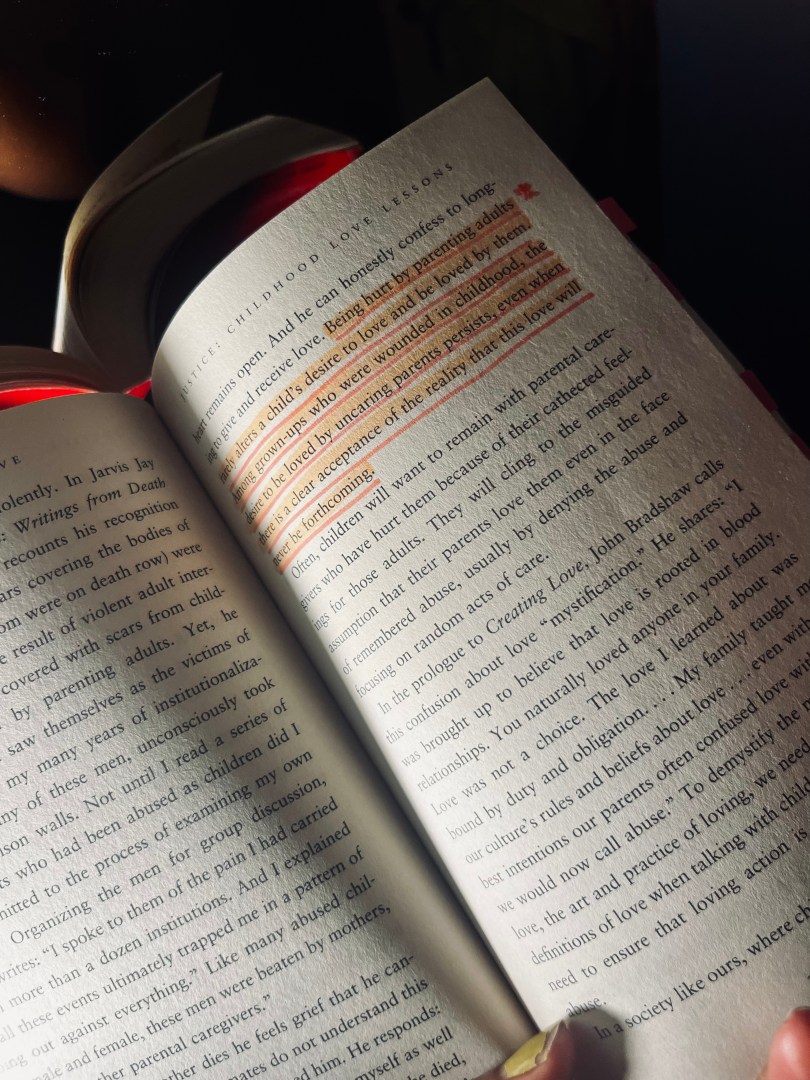
But the inverse was true when I finished a reread of All About Love by bell hooks just a few days ago. The 24-year-old teachings felt more relevant and timely to me now than they did when I first read it four years ago. Admittedly, I was a different person at the time. My reading was informed by the preoccupations, anxieties and vanities of that moment. Coloured by the somewhat small-minded motivations of the time, which were geared towards finding fault and fixing, rather than open-minded inquiry. I got to experience these two selves in the recent rereading through what I highlighted and wrote in the margins then, versus now. There was only one place in which my former and current selves overlapped in what they thought was important enough to highlight back then and again in this rereading.
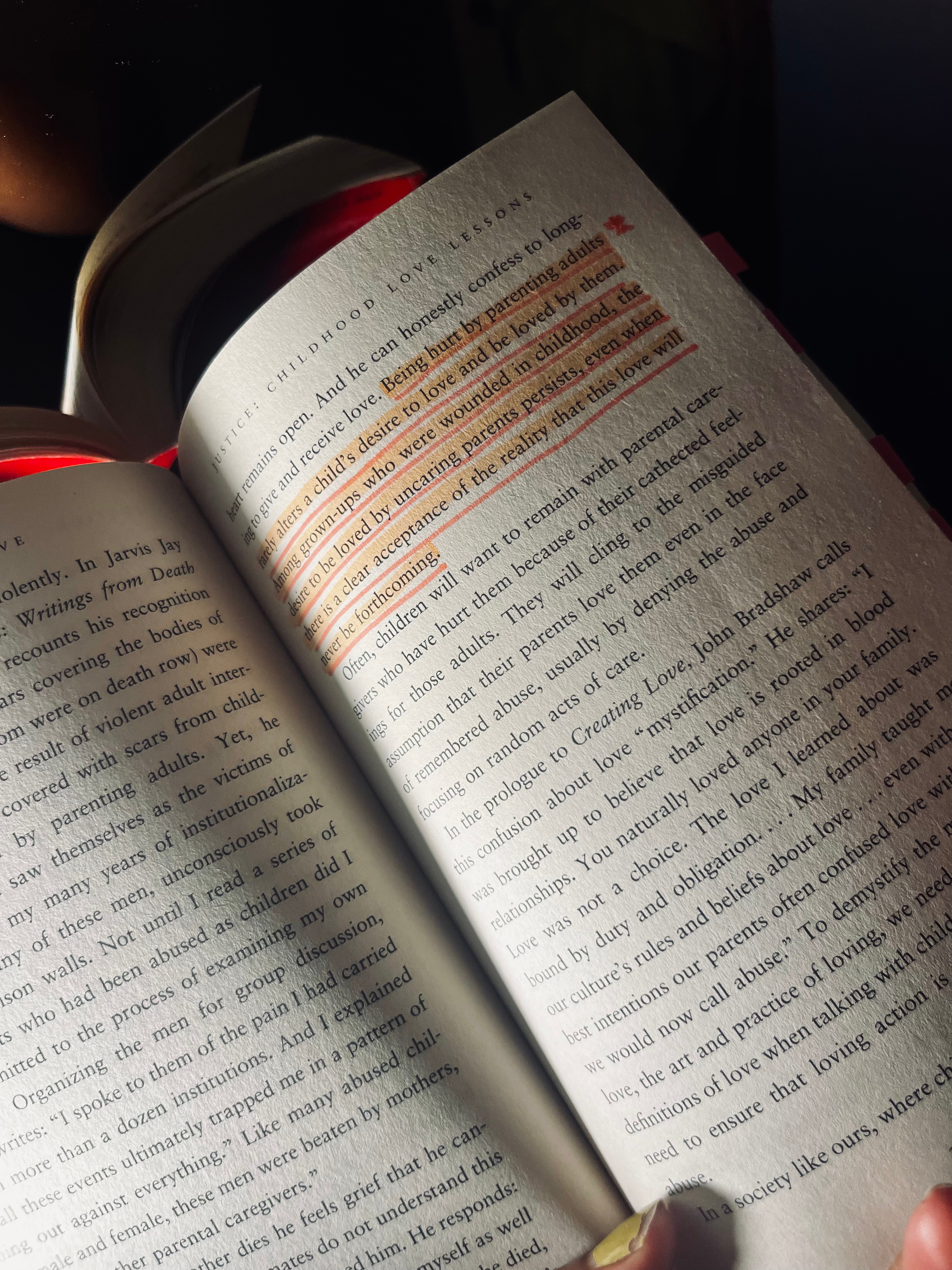
This is not to say that what both readings did to and for me were not important, just different experiences of the same text because I was different, thus was my perspective. Which takes me back to one of the most instrumental and insightful quotes that echoes in the recesses of my mind years after my initial encounter with it as a second-year English literature student:

We don’t see things as they are, we see them as we are.

Anaïs Nin

As someone who used to reread books a lot growing up, mainly because my personal library was tiny, this disjuncture was quite new. There are books I reread specifically because they take me back to a version of myself buried within the pages and emotions the text was initially received in, to revisit familiar and comforting characters, like one of the literary loves of my life, Velutha, from Arundhati Roy’s The God of Small Things or Tariq from Khalid Hosseini’s A Thousand Splendid Suns. When it comes to nonfiction like George Orwell’s 1984, or Steve Biko’s I Write What I Like, or Eusebius Mckaiser’s Run Racist Run, it’s an academic endeavour, rooted in brushing up or recalling in a theoretical way, not testing my present value system against the old, a remembering more than an updating of entrenched inner beliefs.


The timing of a read can be random, sometimes you are drawn to something simply because it’s in your eyeline or the cover is alluring. Or a friend or family member says “you must read this, it will change your life,” and the temptation of a life changed influences you. Other times you are pushed by guilt, a read that has gathered dust while watching newer, shinier books make it to the elusive bedside table despite the pecking order of the growing stack. Or you’re driven by a need to revisit a more familiar world. Or a looming bookclub deadline.The reasons are varied, but what I always find to be true is the person I am at the moment will dictate how I recieve the work or even if am able to take it in at all. In his paper, Why how we read, trumps what we read, Gerald Graff notes that “no text tells us what to say about it, that what we say depends on the questions we bring to it”. There are books like Pumala Gqola’s Rape, which I didn’t have the courage and heart to read six years after I had initially bought it. Books that I have to put down are rarely ever about what’s in them, but what’s in me. And then there are some outliers that no matter when I pick them up, an immediate put down soon follows *cough cough The Heart of Darkness, cough cough White Teeth, cough cough War and Peace*.

Ultimately, that is the one of the joys of reading for me, the freedom to read what I like, when I like. To give a text licence to take over my life and mind for a few days or weeks. The choice is divorced from lists or the invisible place in the line dictated by when a book was purchased, but rather by the pull and capacity that lies in me at any given time. An acknowledgement of magnetic want and need.

Literary Postmortem: You Made a Fool of Death with Your Beauty by Akwaeke Emezi

What a frustratingly delicious and maddening rollercoaster ride this novel was. Feyi when I catch you?! This was a page turner for sure, but because it was a library book, I couldn’t mark it up as I went along so instead, I am going to go through some of the questions in the book club reading guide, as a means to reflect on my experience of it.

Q: Feyi’s interior monologue (and actions) In response to Nasir’s pursuit rapidly oscillates between interest and disgust, as we see in chapter 2: “he was hunting her”; “she wanted him closer. She wanted him far, far away.” What does Feyi want on the roof? Do we know? Does she?

I think she carries enormous guilt about the fact that she not only survived the accident with Jonah, but is now at a place where she is physically and emotionally trying to explore new connections. Feyi is on the roof because she is really curious about Nasir, but also knows she can’t make eyes at him ‘during the people’ (South African turn of phrase, look it up, or don’t). So she knows they can have a private moment up there.

Q: In chapter 3, Joyce says, “Maybe Nasir is it—not the serious thing itself, but just the chance. Don’t run away from it,” in response to Feyi’s insecurities about accepting a date with Nasir. Later, Joy’s voice in Feyi’s head tells her to take a chance. What does this chance refer to and what could it mean will Feyi?

A chance at a real romantic relationship, what she has with Milan is purely physical but she can already sense that things would be a lot more serious with Nasir.

Q: When thinking about her developing emotional intimacy with Nasir, Feyi considers the fact that their physical intimacy is moving glacially. In chapter 4, Feyi asks Nasir whether he was sleeping with anyone, and his response allows for a shared moment of trust and humour between them. Nasir uses that space as an opportunity to inquire about Feyi’s studio. How does this reflect their respective outlets of intimacy and their inevitable relationships to it?

There’s a quiet acknowledgement that Feyi isn’t quite ready for physical intimacy because Nasir is ‘more’ than just a guy, knowing that he is being ‘serviced’ elsewhere brings her some relief that she can push that task even further out (emphasis on task). I remember taking issue with how this conversation moved on so casually, flippantly almost. But I recognise that is because I hold a candle for Nasir and I was upset that he was stepping out on us 🥲😅 The pivot to the studio conversation is his effort to get to know her more deeply, he is at this moment operating under the premise that she wants to be known fully before taking their relationship to the next level. Oh, if only he knew 😦 Shame I’m being unfair she also was giving their relationship a genuine chance at this point, but definitely holding back A LOT under the guise of taking things slow.

Q: “So much of her time was spent in uncertainty” Feyi reflects on her imposter syndrome; meanwhile “It was hard to imagine Alim ever doubting if he fit into whatever he was.” What were Feyi’s doubts around her work? How does this doubt pervade other aspects of her life and how does she view Alim’s sureness in comparison?

Because her art is so personal, it puts her life up for scrutiny and judgment from others and herself. It operates as a mechanism to memorialise and process, which requires enormous amounts of vulnerability from her, which she isn’t entirely comfortable with. Alim is able to practice his art more freely because he is more open and quick to vulnerability, it colours his world as opposed to dimming it in hers.

Q: “It was something she wanted to hear—what it was like to fall in love again after your heart had been shattered. She could feel Jonah’s presence on the mountain peak, gentle and curious,” writes Emezi in chapter 10. How does this differ from past moments of intimacy up until this point, when Feyi felt Jonah’s presence?

In other moments, she was overcome by guilt, and Jonah’s presence was her internal warning signal that what she was doing was not ‘right’. When she is on the mountain top with gramps (sorry, not sorry #justiceforNasir) because she feels strongly for and about Alim, she doesn’t feel that guilt and/or shame; instead she feels the warmth of a familiar safety and calm by being with someone who makes sense to her.

Q: “’ There are so many different types of love, so many ways someone can stay committed to you, stay in your life even if y’all aren’t together, you know? And none of those ways are more important than the other,” Feyi says in Chapter 11. Why is this perspective liberating for Feyi?

I think she realises that moving on isn’t about forgetting Jonah, that being devoted to his memory doesn’t have to mean staying stuck in her hurt or even in who she was when they were together.

Q: In Chapter 11, Nazir tells Feyi, “Lorraine and I don’t have a lot of memories of our mum. The house helps us remember.” What does this house represent to the Black family? And to Feyi? How do these meanings influence the space she occupies in it?

I think it is a living monument to the memory of what they lost and the effort to keep things together through physical reminders of what once was. It also signals an inability to move on in some ways, less nostalgia, more shrine if you know what I mean. Crazy to me that Feyi feels a pang of jealousy seeing family photos – like yes doll, where do you think you are?!

Q: Feyi fondly recalls Jonah’s words in chapter 15: “He said [being messy is] one of the best things about being human, how we could make such disasters and recover from them enough to make them into stories later.” How has this informed Feyi’s decisions in life since Jonah’s passing?

Well she’s made quite a big mess of things at the Black’s, so that’s one. This recollection allows her to remember that she can prioritise herself and her desires (not that anything had been stopping her to be fair).

Q: What is the difference between Alim calling Faye his friend and Faye calling Nasir her friend?

He meant it, she didn’t 💀

Q: “You know you can always just come home right?” Joy reassures Feyi in chapter 16. What or who is Feyi’s home here?

Joy is Feyi’s home now.

Q: In chapter 17 we witnessed the confrontation between Nasir, Feyi, and Alim. Discuss whether you expected it to go down this way or not. When Nasir’s anger and subsequent actions justified? Were Alims? How is this possibly triggering forfeit?

I actually did because I was BIG MAD myself, but I was also scared of him and what he might do in that moment, I understand why she was terrified too.

Q: Alim tells Feyi in chapter 18, “I can’t bring myself to not try to give you the best every year I have left,” to which she requests he make “no plans.” Why is Feyi resistant to making plans?

Because people can die tomorrow and none of those plans would matter, she has conditioned herself to live moment by moment because of the fear of loss that constantly walks beside her.

Q: “You can see [my painting] in any stage it’s in. I don’t care, I like showing myself to you,” Feyi tells Alim in chapter 21. How does this stark difference from her objection to showing Nasir her artwork parallel the differences in their respective relationships?

This really hurt me, because Nasir was so eager, on board, down-for-whatever, desperate for her to show herself to him. But she just couldn’t and I guess that’s only fair, we don’t have to match people’s attraction/energy/care, but I do think he was owed more honest communication about the improbability of her feelings for him growing beyond a homie level.

Q: “You’re worth it, Feyi. You can be yourself, as messy and contradictory as you like,” Joy affirms in chapter 5. “He’s lucky to even be near you.” Feyi’s feelings seemed to be at odds with each other throughout the novel. Speak to the inherent beauty in the contradiction and comfort and transients that come as a result of Feyi’s growth, both within our protagonist as well as from the perspective of the reader.

I struggled with her choices, not gonna lie, but I get them. She gave herself the chance to figure out what she truly wants and needs. She was ten toes about what she did and didn’t want for herself. I suppose the intensity of my disappointment helped me realise that people fiercely choosing exactly who and what they want for themselves might always look crazy or wrong or ill-timed to others, but that those things can’t and shouldn’t inform whether or not they make those decisions. That sometimes your body knows before you do what is meant for you and what isn’t. As much as I was batting for Nasir, choosing him would have been a betrayal of self that actually may have set Feyi back even further in her journey of healing. Alim, whether I like him or not, was the person she needed to help in coming back to herself fully and simultaneously shed the survival version that had been in the driver’s seat for the last few years (unfortunate pun, forgive me).

That said, #justiceforNasir, tell him he can find me @pheladi_s on all socials.

SundayScribble #9: The purple shall govern

Maybe? Hopefully.

I remember going to a photo exhibition at the Michaelis Gallery at UCT’s Hiddingh Campus some years back, which stayed with me for weeks and now years on. It was titled, Promises and Lies: The ANC in Exile. The part of the exhibition that stayed with me was the opening words from the Freedom Charter, “The people shall govern”. It was painted in big black letters on a white wall. Other parts of the charter were also visible on the gallery’s walls, but this bit, right at the beginning of the exhibit, remained etched in my head.

Flashbacks to that exhibition came rushing back in the last few two weeks, as purple profile pictures flooded our timelines in the build-up to the women’s shutdown on Friday, November 21. Discourse about the performative nature of the protest, the optics of the timing, the work already being done to fight gender based violence (GBV) at policy level, the classist nature of the ways people could show solidarity, the difference between a crisis and disaster and and and. What cut through the noise, ultimately, was that very deluge of performative profile pictures, which garnered enough international and national attention to force the South African government to first declare GBV a national crisis and then later a national disaster. A move, which will hopefully lead to the kind of accountability and urgent action this crisis demands.

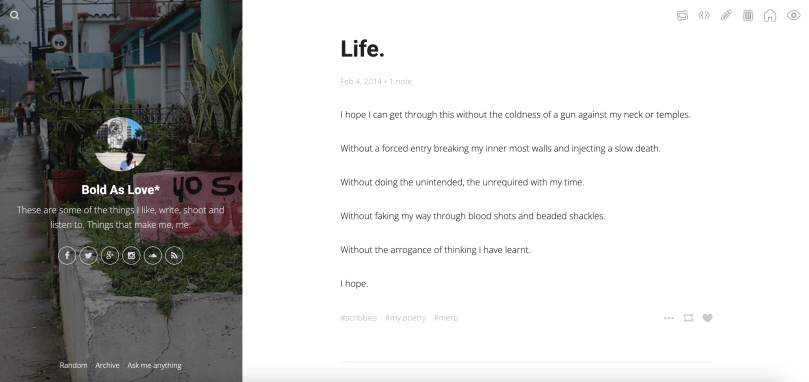
An old tumblr post, speaking to the space the threat of violence occupies.

Living in this country requires being fuelled by immense amounts of hope, hope that you will make it through the day unscathed, that things will get better, that we might get better. This constant dose of delusion you have to down, coupled with the cognitive load of hyper vigilance, makes for a heady mix. The very threat of violence can alter the way our brains work. Violence is an unfortunate hallmark of our culture, one either has scars from being its victim or the precarity of becoming one.

Anyway, the reason this brought that exhibition back into my mind’s eye, was the realisation that messy but deliberate action can still bring that idealistic principle to life. Even and especially when we don’t have all the answers, but have something to say. That persistence is still viable. That different, better is possible.

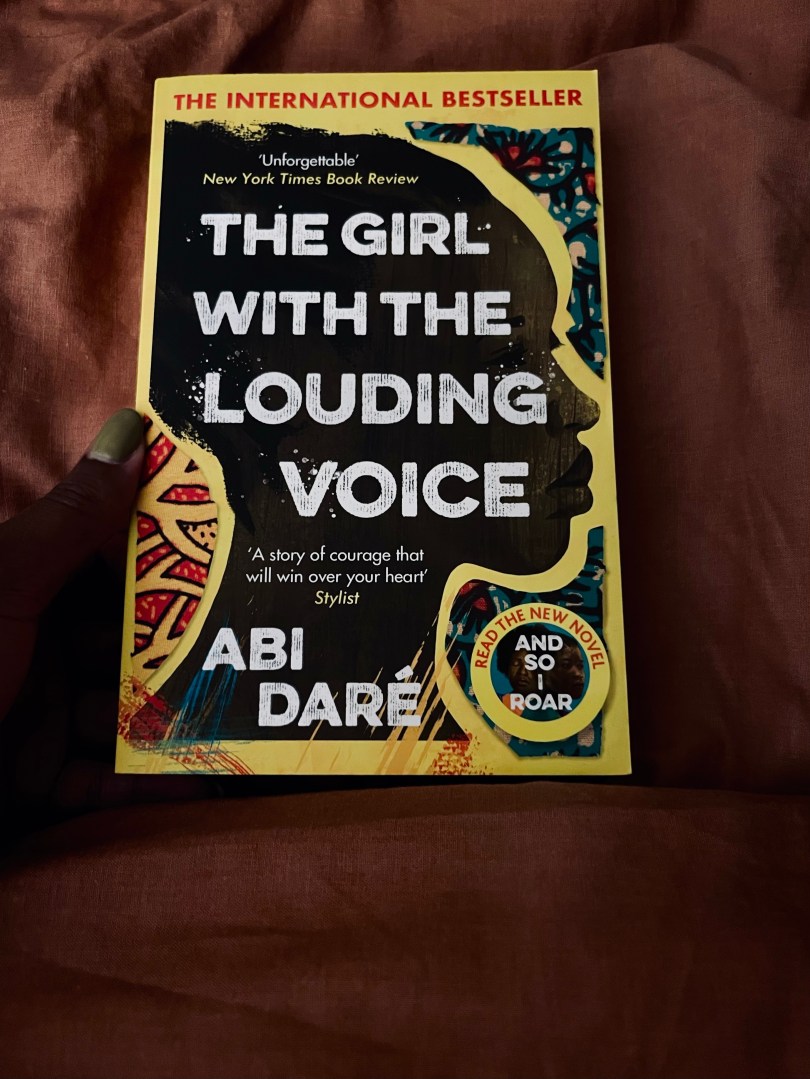
Literary Postmortem: The Girl With the Louding Voice by Abi Daré

Things just kept getting worser and worser with each page I turned in this read, the sheer volume of violence and injustice both overwhelming and infuriating. Which is why I could barely put it down and sometimes spent an extra two or three hours reading before bed, I was captivated by Adunni and Daré’s literary presentation of life in rural and urban Nigeria in the early 2010s. 

I had heard much about the protagonist, Adunni before even opening this book from friends and people I go to the same internet with, mostly because of how she speaks. Daré makes the deliberate decision to write Adunni’s thoughts, fears and hopes in the broken English of a 14-year-old who didn’t quite finish school, which is true to the character and adds so much honesty to her story. The “nonstandard English” spoken by Adunni was less confusing than expected and often times more descriptive to me of the situations she found herself in, phrases like “the sky have eat up the morning sun” to describe an overcast sky, and “cold is spreading rashes all over my body” to describe goosebumps, provide such clear imagery. I think for me, the language alone was the thing that allowed me to be steeped in Adunni’s innocence and fostered an intimacy that kept me ‘on side’ no matter how bad things got for her.

Adunni’s tale is coloured by various indignities, violations and brazen injustice. The thing that keeps readers afloat is her determination to somehow overcome those odds. I usually hate an ‘against all odds’ narratives, in which wave after wave of evil is meant to simply be thwarted by sheer resilience, but Adunni’s character implores you to stay with her through all of it. She is fuelled by the prospect of different outcomes, which keeps your hope alive as well, despite the deep poverty, child marriage, domestic violence and slavery of it all. 

The chapters are short but jam-packed, which makes for a fast-paced, page-turning adventure. Daré has written some of the most endearing and repulsive characters, people like Big Madam and Morufu filled me with unspeakable rage. While their context and complex backgrounds are unpacked and do shed light on why they are the way they are, it’s a cold comfort when the object of their frustration and abuse of power is a little girl.

From about halfway through, I appreciated and even looked forward to the foreshadowing at the start of chapters, provided by whatever fact was quoted from ‘The Book of Nigerian Facts’. I like my fictional reads injected with some historical tidbits that feed my insatiable need to know things. The facts about Nigeria were fascinating and sobering, for example: 

“Fact: Child marriage was made illegal in 2003 by the Nigerian government. Yet, an estimated 17% of girls in the country, particularly in the northern region of Nigeria, are married before the age of 15.” – page 194/Chapter 35

I was looking forward to finding out some more of these revelatory facts in the book once I purchased a copy, only to find it was a fictional book used for the purposes of the narrative in the pages of this novel 😦 There is, however, a Nigerian Facts Book published in 2022, which I imagine aims to do the job of the book Adunni uses to learn about her country and her life really. 

In short, it’s a harrowing but highly entertaining read, filled with twists and turns that will still your sensibilities. I will probably never read it again because of how much trauma lives in it’s pages but I would recommend it. Best bits below.

Sunday Scribble #8: Enough with the prettiness, give us good food Joburg

The true cost of aesthetically pleasing establishments is our tastebuds.

Eating out in Johannesburg is often a 50/50 risk, which will still cost you an arm and a leg whether you are satiated or not. One thing about this city, is it’s ability to use its beautiful veneer to draw you in. Looking like one thing while being something else, usually something incongruent with what lurks behind the shiny procelin. It’s an art, really, one which I can respect in certain situations. Just not on my plate, please.

The day had started off pretty well, I drank a green juice and a flat white on the mini road trip that was my drive from Pretoria to Johannesburg. I had timed my drive to our book club meeting really well, and no traffic formed against me prospered. I drove under several purple canopies to boot, thanks to Jacaranda season, all seemed in alignment for more good things to unfold as the afternoon went on. But, “not on my watch”, said the uncooked food in the kitchen at Besos, waiting to ruin my day.

Walking in was an experience, naturally. They created a little walkway filled with greenery, which leads you into the restaurant. It was giving tropical oasis, I didn’t feel like I was in the little shopping complex I parked in just three minutes ago. Inside, the beige, cream, wood and soft lighting of it said, “welcome, relax”. The girls and I were dressed to the nines, ready to sip on some wine and yap about the book of the month.

Not one of us had a meal we could speak kindly of, even though our orders ranged from breakfast meals of eggs, salmon and sourdough, to heavier steak and chicken dishes. I had what they called a Gnocchi stack, which ended up being two very bland crumbed chicken schnitzels with equally unseasoned basil pesto plonked on top. Oh nkosi yam. I force-fed myself at least half of it before calling it. The best thing I ended up having was the Springfield wine we shared, a difficult one to mess up. The very average experience our palates then saw us swiftly settle our bill and head elsewhere for cake and coffee to wash down, or rather wash away our lunch.

Unfortunately, this is an all too familiar experience in Joburg: well-curated, photo-ready spaces and overpriced, basic food we all could have made at home. I say overpriced because I can’t tell you the last time I had a main meal that was under R200. It’s easier to swallow the pricetag when the food is worth it, but when it isn’t, oh, the penny pincher in me comes out. Which is why I have now come to adopt a system that distrusts any posts speaking of “new hidden gems” and simply frequenting tried and tested staples in the city.

The underwhelming encounter reminded me of a music event I really enjoy but have had to boycott for the past two years because they insist on hosting it at a restaurant (if we can call it that) infamous for terrible service and even worse food. This can’t be life. Only patronising vetted establishments and eating the same, safe meals over and over again as a trauma response to beautiful spaces masking bad food. Give us, us food Joburg.

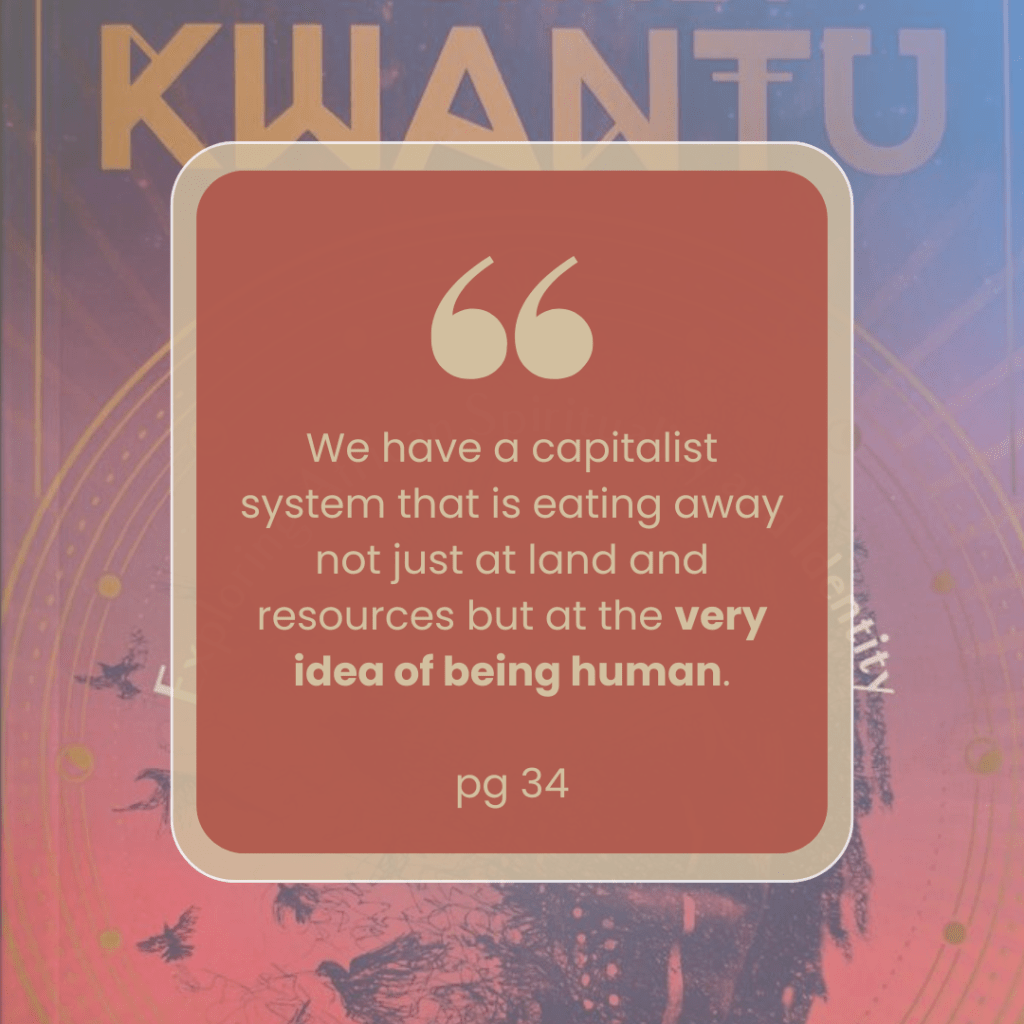
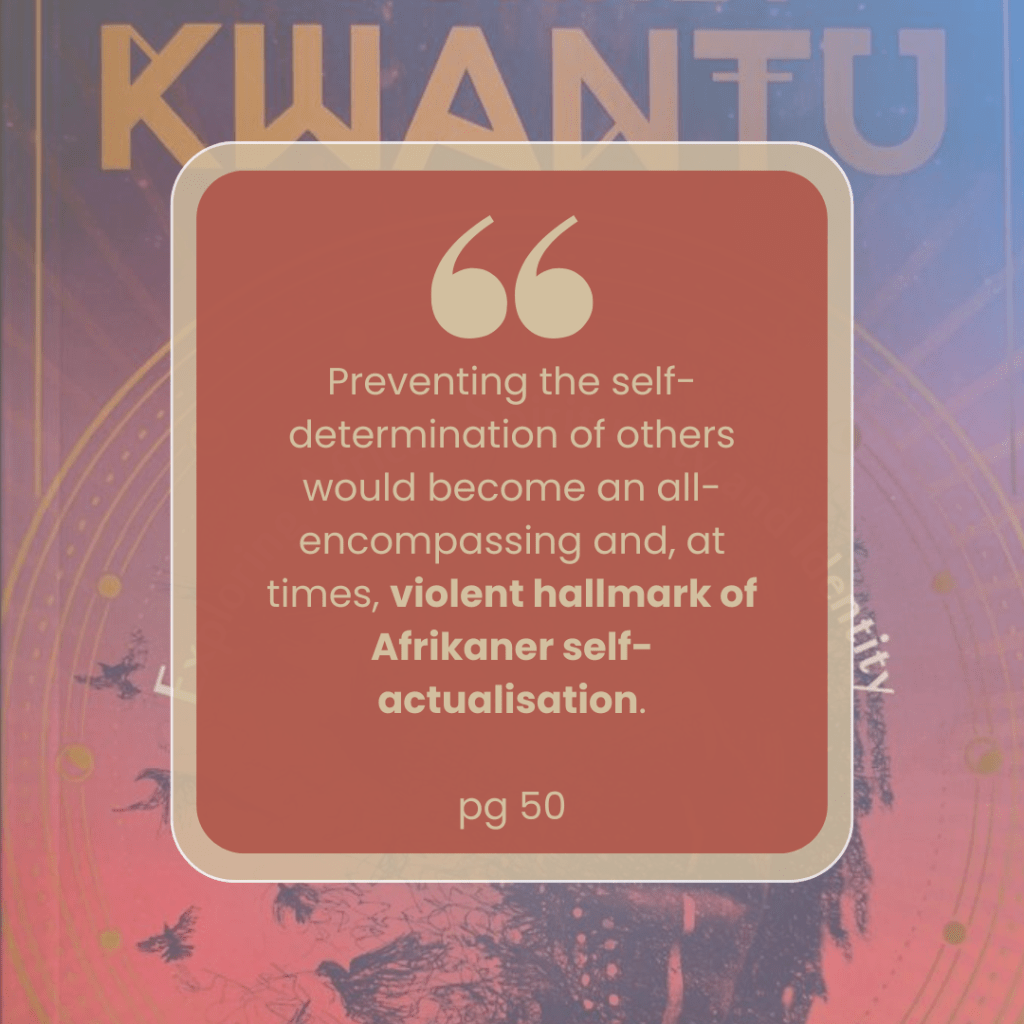
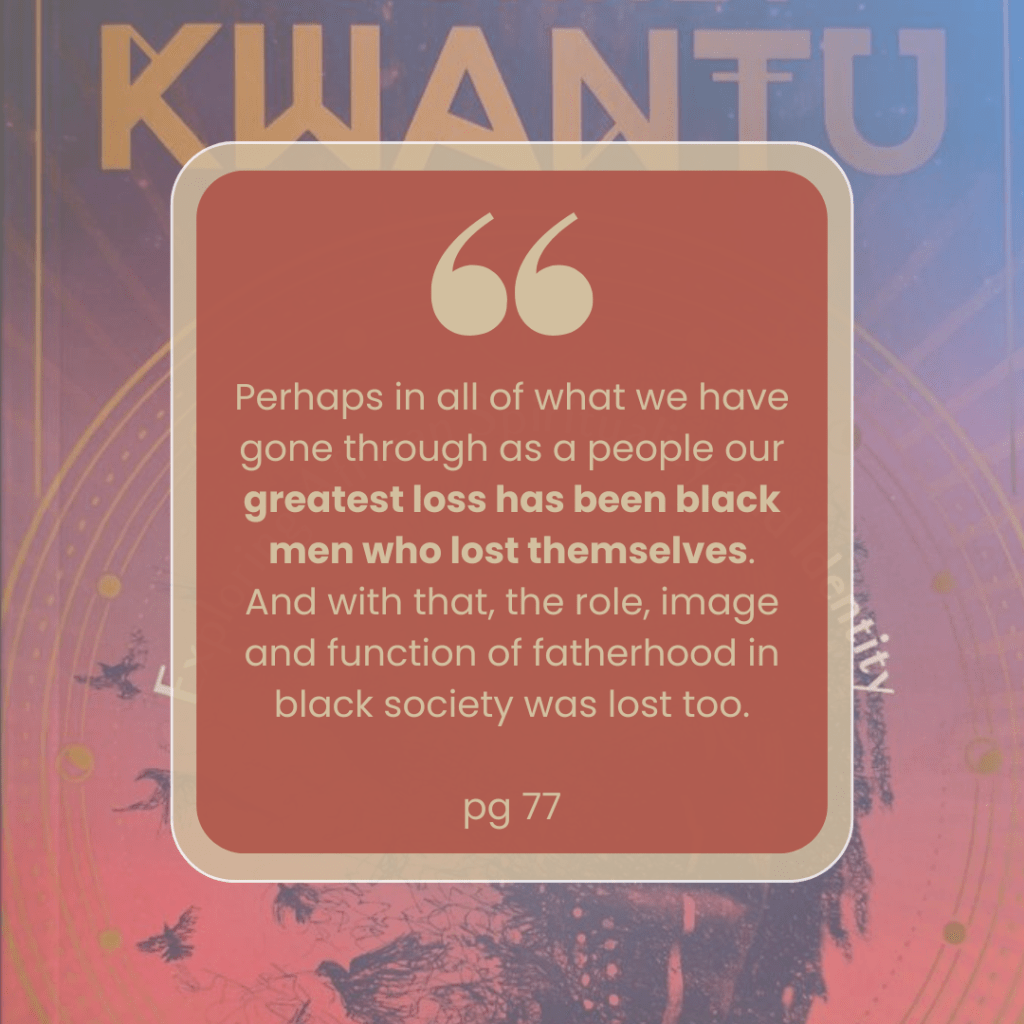
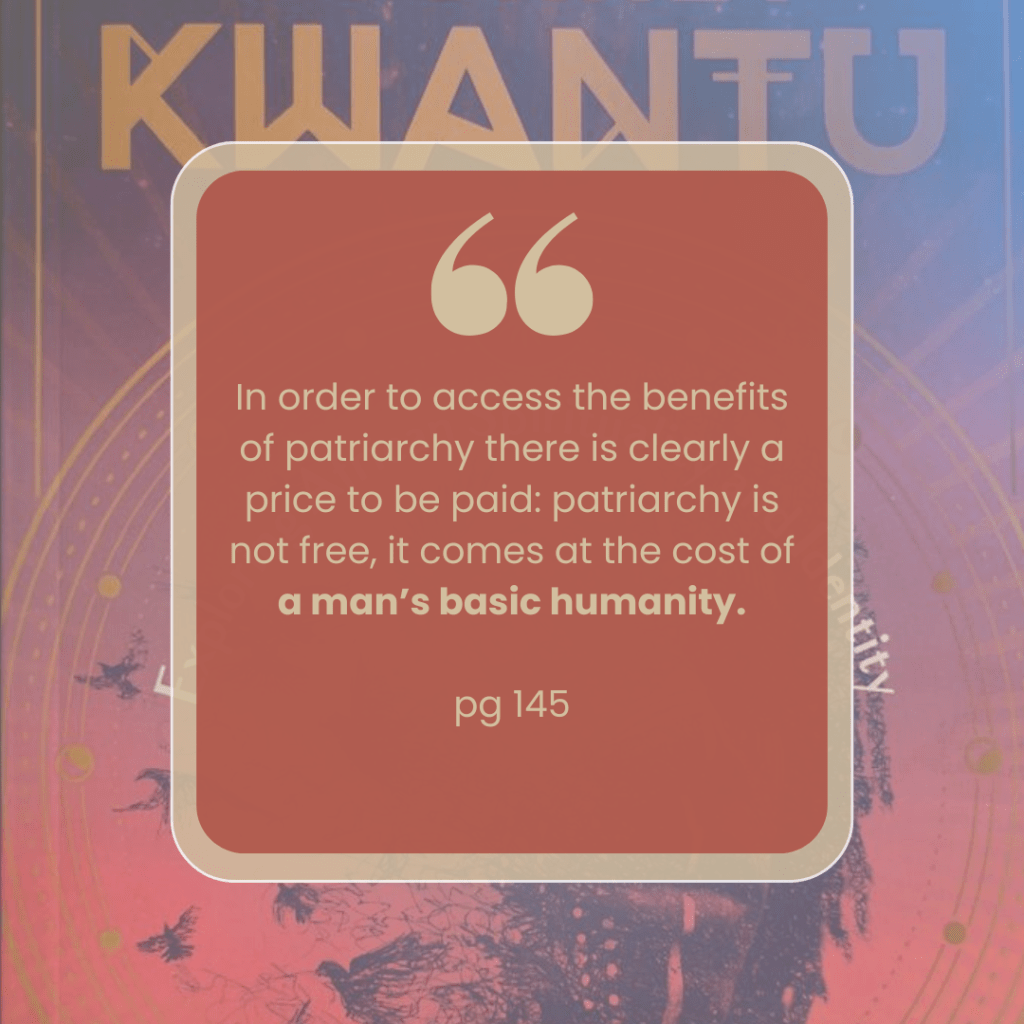
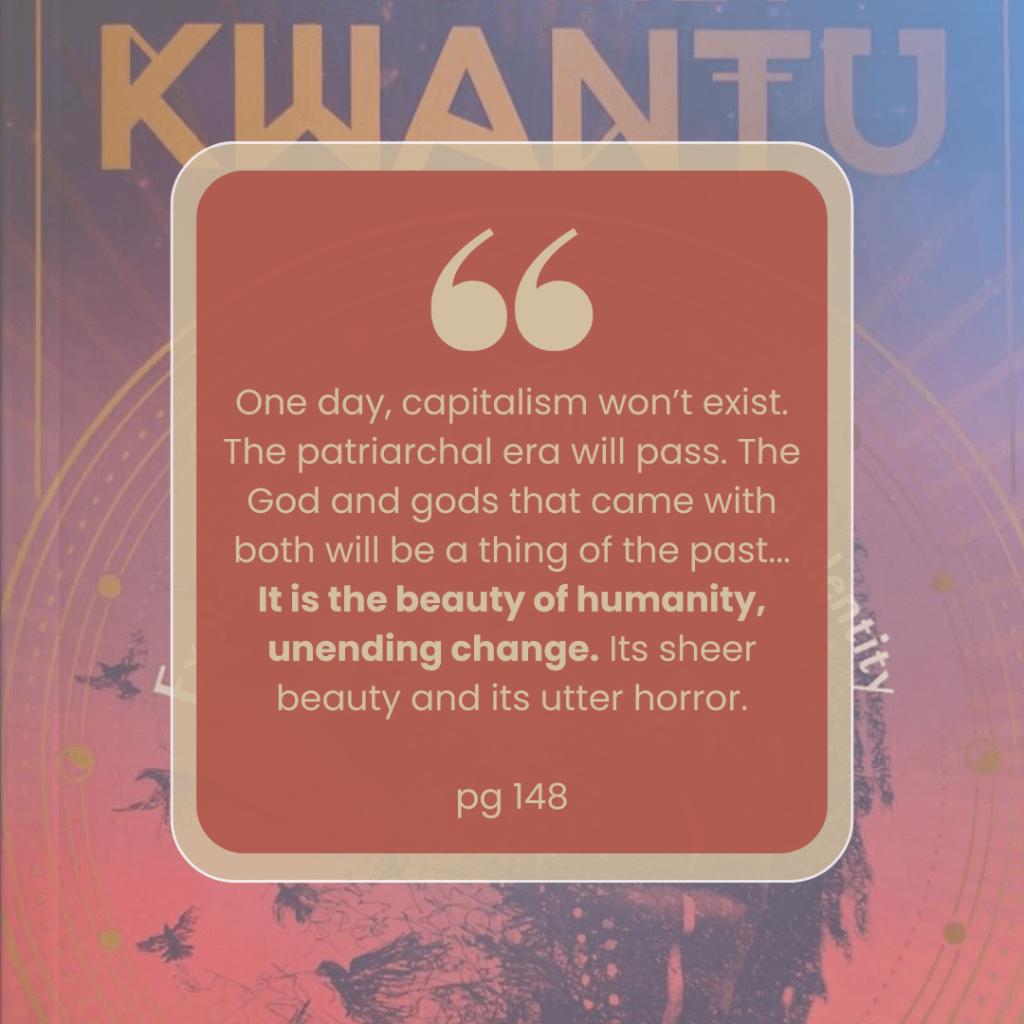
Best bits: Journey Kwantu by Vusumzi Ngxande

Finished reading this about a week ago, but the lessons and revelations have stayed with me, interrupting my train of thought several times a day, in an effort to grapple with its many inconvenient and reality-shifting truths. 

It’s an essential read which uses the author’s personal journey with African spirituality to tell a nuanced and well researched story that contends with mythology, history and anthropology. In so doing, it presents possibilities that challenge readers’ perceptions and beliefs. 

There are many things I am still in disbelief over, like cows being one of the reasons matriarchies came to an end on the continent; cotton being one of the true assimilatory tools of colonialism and the knowledge of family lineages being lost to the (in)convenient surname system. I am forever indebted to the author for this expansive work. 

I know I will have to revisit it and look forward to that occasion. Listening to the podcast series the book is based on is my next mission, and from the snippets I have heard so far, I am in for a treat.

Sunday Scribble #7: Nothing even matters at all

When the news broke that D’Angelo had passed earlier this week, one of the first reactions I came across online read: Mind you, I thought I would’ve had a first dance to “Nothing Even Matters” by now! (a post by @yasistatorrian). To which I replied, “Oh girl, same”. The deluge of grief and love for D’Angelo that filled my timeline and inboxes this week has felt like a communal catharsis. The sadness of the loss was overridden by the reminder of his deep love of self and the other.

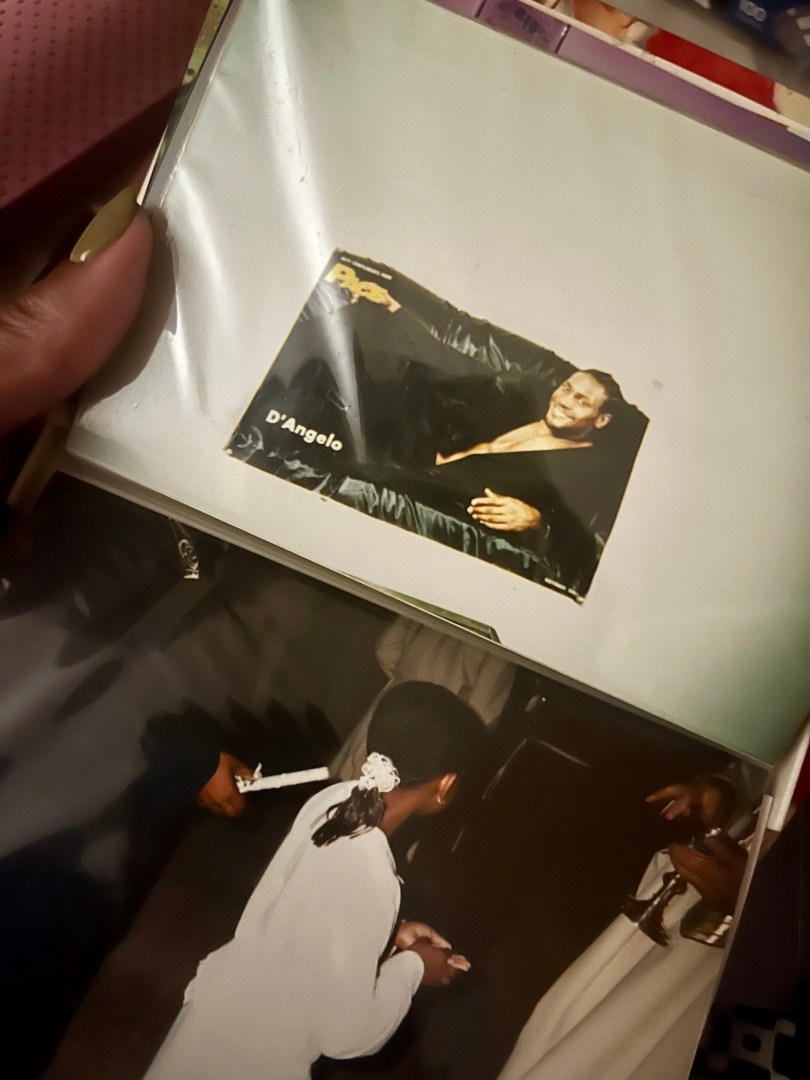
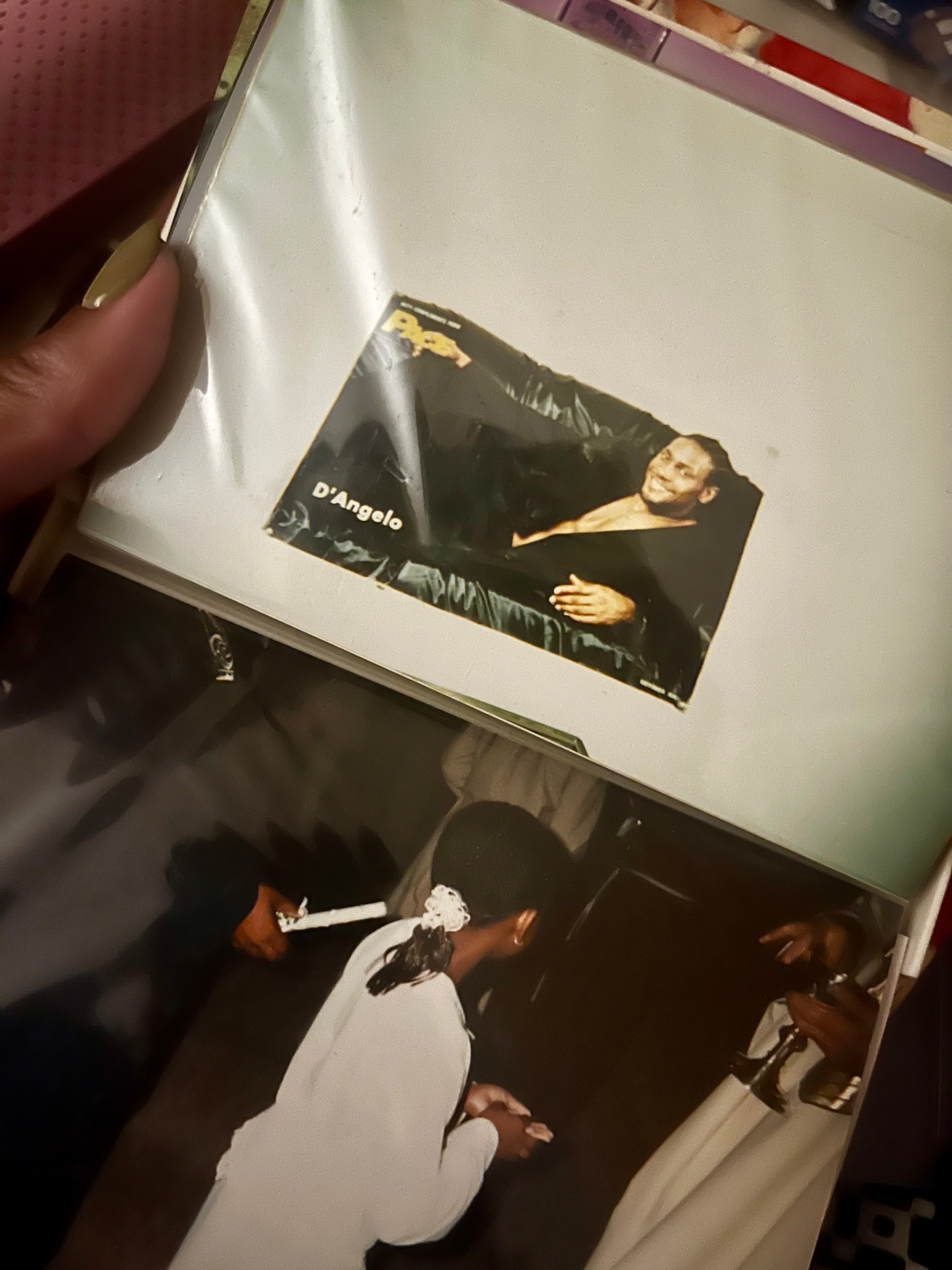
Like millions across the world, my first encounter with D’Angelo and his work, was through Untitled (How Does it Feel). I was very young, too young to understand the lyrics, but seeing the music video on a late-night music show on SABC 1 stayed etched in my mind. Some months later, a performance of “Send it On” and “Sex Machine” with Tom Jones on VH1, prompted me to rip the below poster from the middle of a magazine, risking judgment from my Catholic parents, sticking it front and centre on my candy white bedroom wall. At just 9, turning 10, I still didn’t grasp what the man was saying, but my ears and eyes were in agreement about his sonorous and physical beauty.

So taken was I, that I even took a photo with my film camera of said poster. Unironically sandwiched between photos of my first holy communion, which took place in the same year Voodoo was released.

The music itself was dripfed to me in the years that followed during our weekly Saturday morning and afternoon spring cleans. My brother hogged the CD player, blasting Brown Sugar and Voodoo back to back. The VH1 live performance would also join the loop, it had been recorded via our VHS machine. We actually watched a lot of live music that way, as a family over the years, now that I recall. It was only when I got my own CD player in high school, that I could start listening to and reading through lyrics on the album sleeve of Voodoo that I began to hear beyond the melodies I had grown an affinity for over the years. Finally, stretching my understanding past just “di D’Angelo” (the South African reference for his undeniable Adonis belt), into the depths of his music. For the first time, I heard what yearning sounded like from the mouth of a black man and not the page of a Jane Austen novel. I heard what sounded like the celebration and reverence of black love, a welcome intervention for a black girl who was one of only 6 in her grade, listening to Avril Lavigne and reading Saltwater Girl (quite seriously at that).

“[He] made a kind of sound that made a house for black folks to live in. Under the sound of D’Angelo’s music, our bodies would wake up to who we have been… He made the ancestral close and intimate and sexy.”

Michael J. Ivory, Jr.

By the time the masterpiece that is Black Messiah came out, I was a long-skirt-All-Star-wearing-Africa-tattooed-dreadlocked-girl, in no need of saving. When it came out, I promptly bought two CD’s, one for myself and one for my brother, so we would need not fight for or ration out our repeated listenings. Three short months after it came out, Kendrick Lamar’s To Pimp a Butterfly came out, and that perfect pairing of love, politics, history and torment would be the soundtrack to my long car rides between Johannesburg and Pretoria that year.

We are bereft but blessed to have lived in the same time as him, to still have access to his work and thus pieces of his heart and mind.

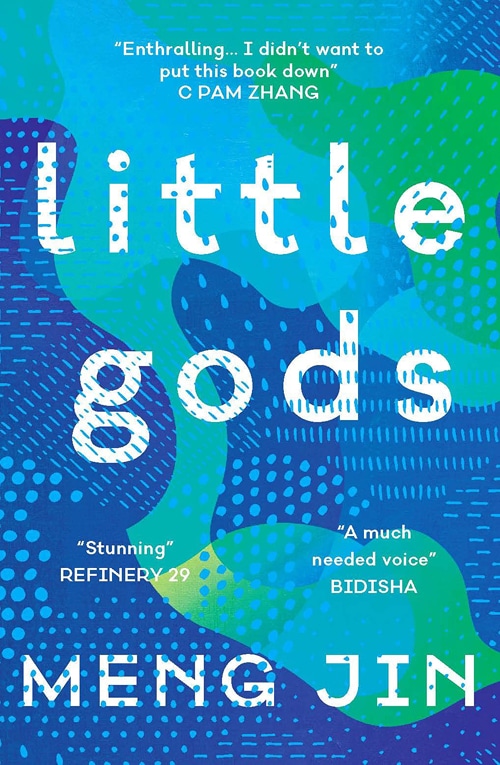
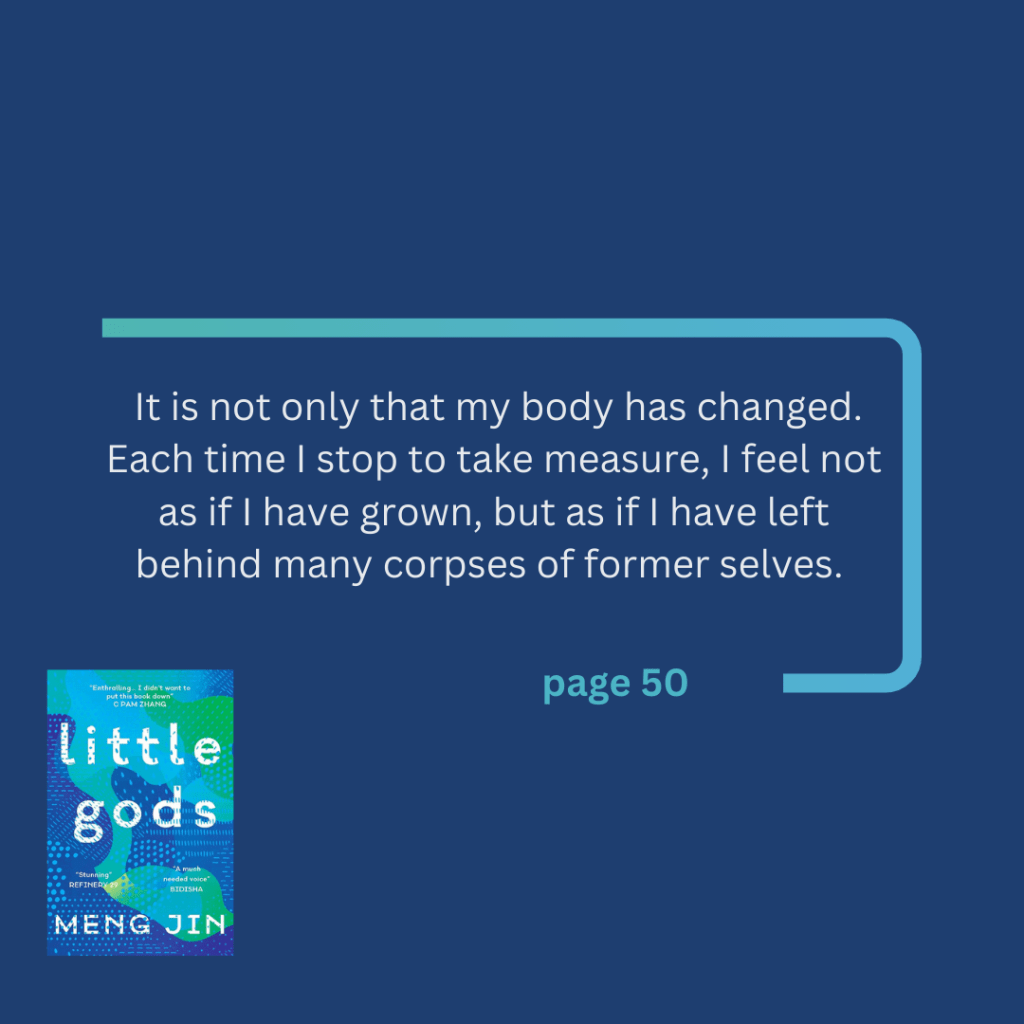
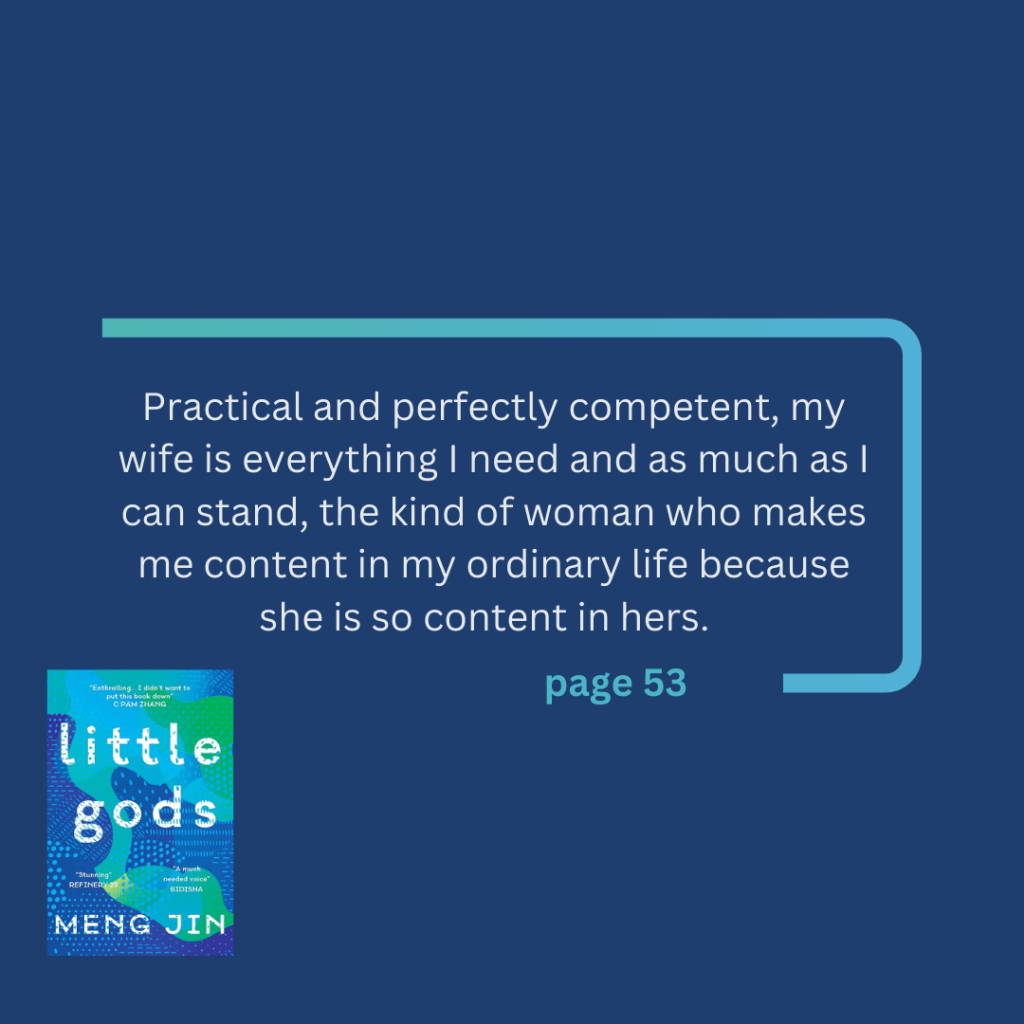
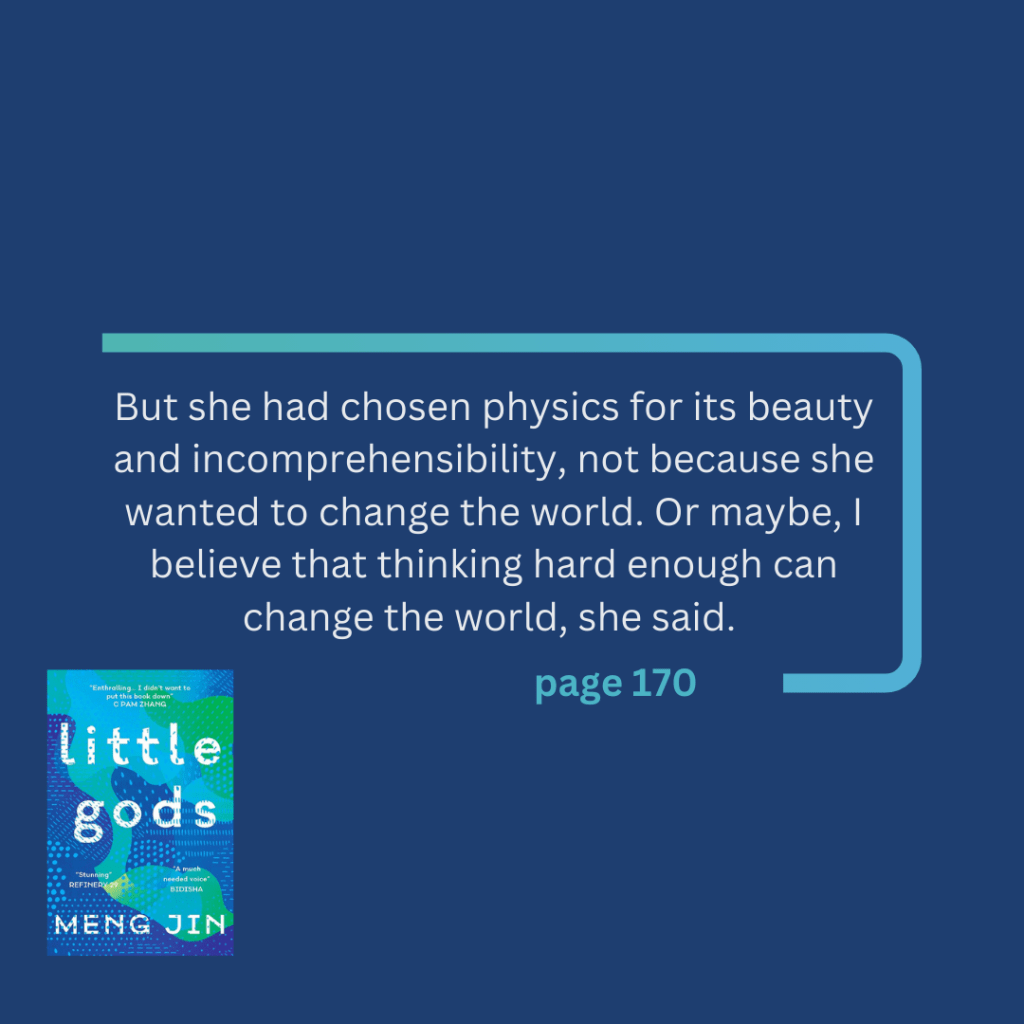
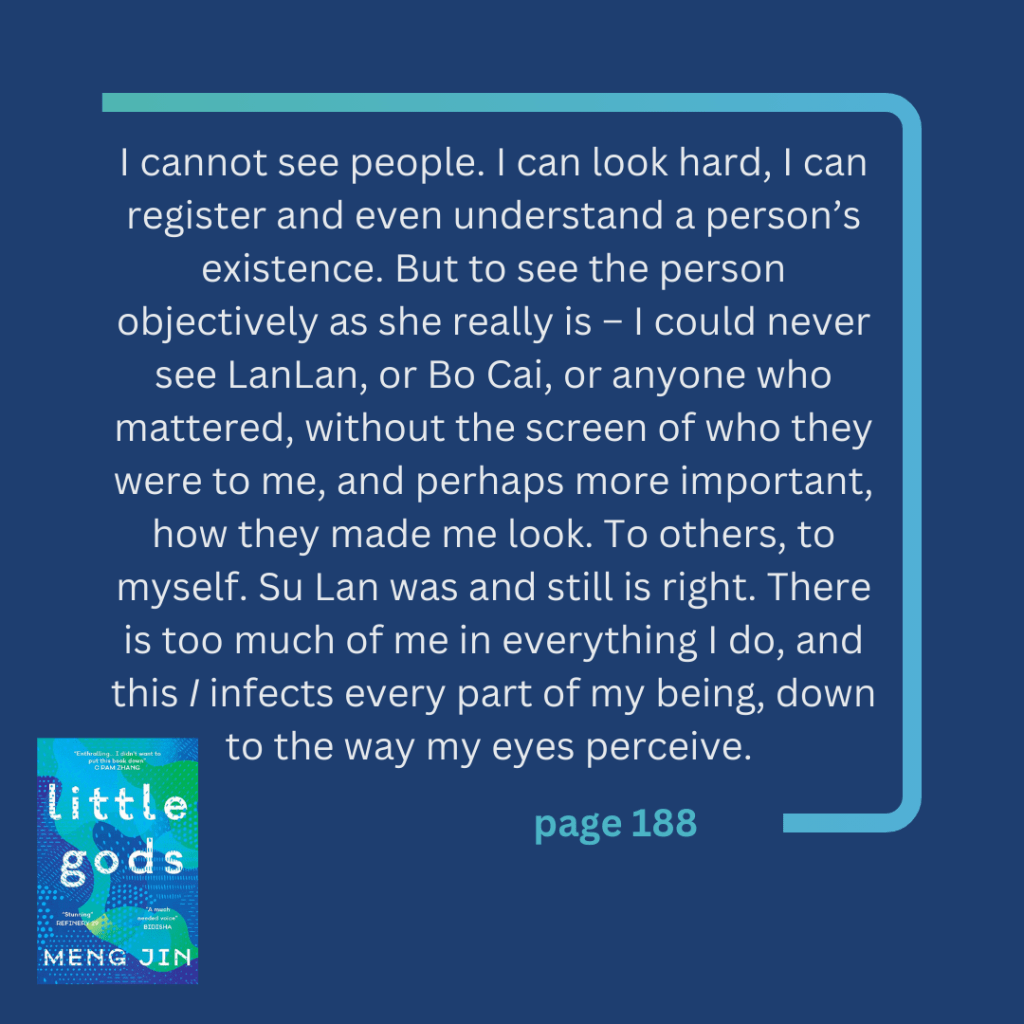
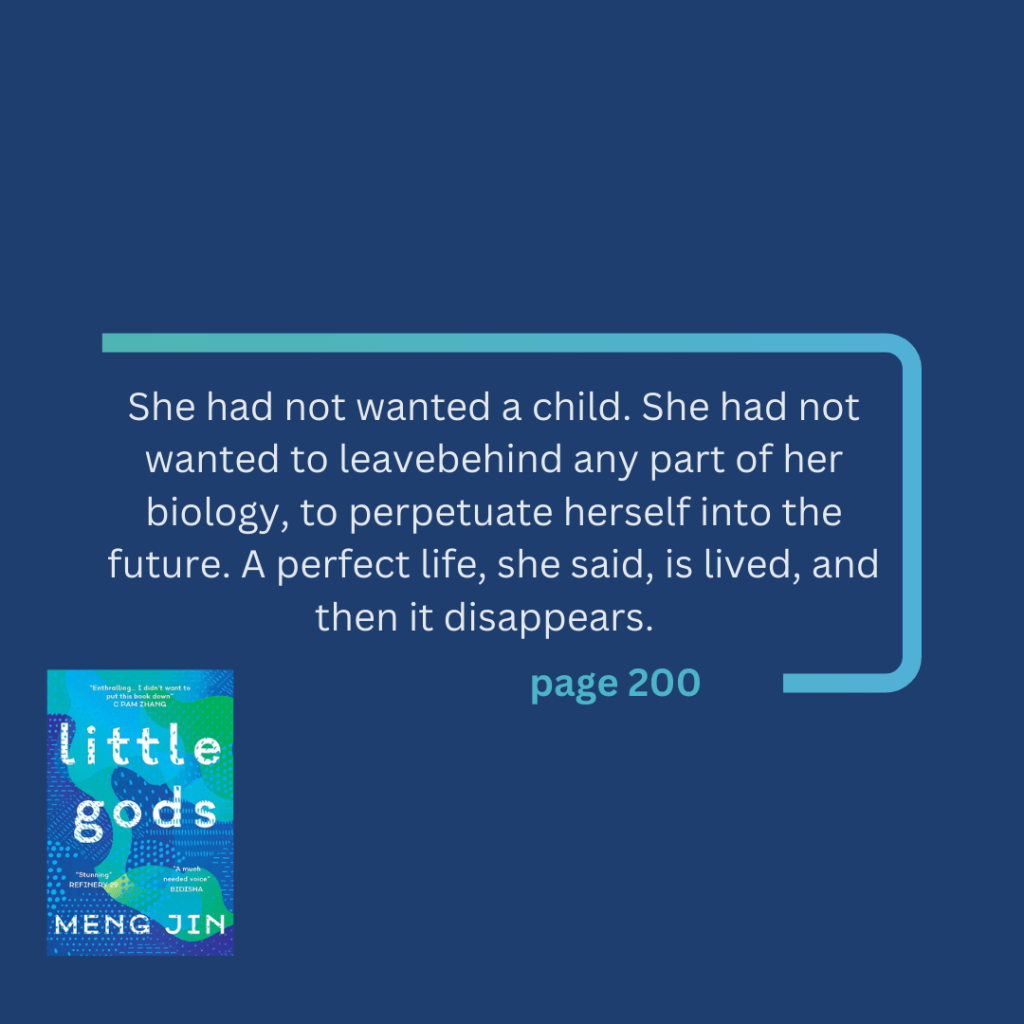
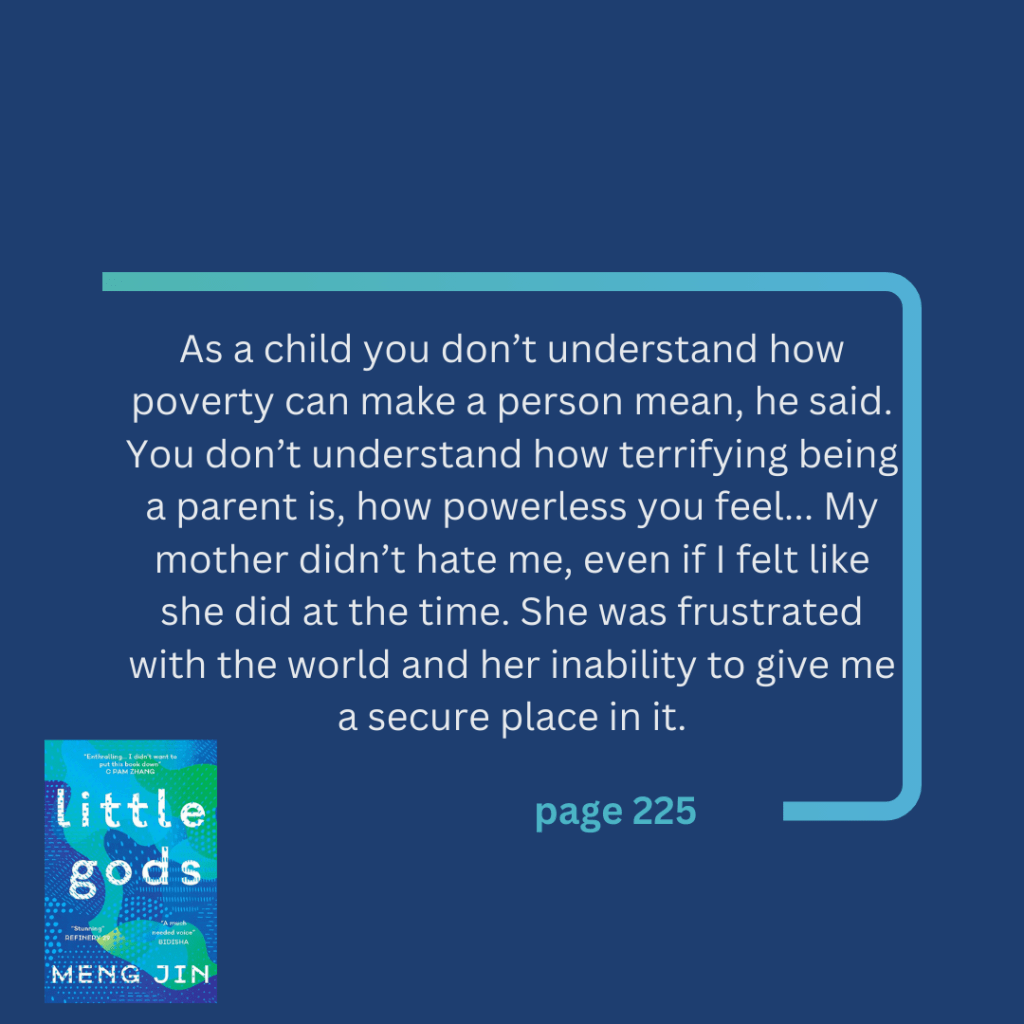
Best bits: little gods by Meng Jin

This might be my favourite read of the year.

It is the kind of novel that doesn’t let up from the moment you start. Every sentence dripping with intellect, emotion and beautiful imagery. Jin is such an incredible writer and world builder, thoroughly enjoyed my time with her complex and complicated characters.

I would describe little gods as historical fiction that is a clever marriage of science and spirituality. The characters are frustrating yet inspiring and force you to constantly question who you are rooting for. Even the most minor characters we only engage with over a few passages are written in such great detail that an affinity is immediately fostered.

There were so many sentences that took my breath away, I cannot wait to find and read more of Jin’s work.

Sunday Scribble #6: Silence as a salve

Silence can feel like a sensory bath.

It started out of pure frustration. A day that had tested me to what felt like my limit, a mind reeling with all the things left undone, difficult conversations to be had, dreams deferred, the torment of uncertainty, and and and. As I stepped into my car and turned on the ignition, the afternoon drive show’s host sounded like the shrill screech of a drill bit being forced into an impenetrable surface. Her words jumbled into the sonic equivalent of being suffocated by the overwhelming and cacophonous voices already fighting for space in my head. In that moment, I had to switch off the car radio to stop the drilling. The sounds coming at me from the car radio were not a nifty distraction in this moment, but a loud chorus from a loudhailer that threatened the fragile state I was in.

The 30 minutes and 40 kilometres along the M1 and N1 highways that followed slowly ushered in calm, lowering the voices that had been fighting for their moment at the podium of my mind, to a whisper at first and then to nothing. Suddenly, a moment of panic was de-escalated by tuning out further distractions. Surrendering to complete silence had allowed me to turn down the volume without even trying. That single drive changed the way I commute. Now, silent drives are an essential part of my daily and weekly routine, not just in times of high stress or overwhelm, but as a key ingredient I need to stay sane. Initially, I did think of the exercise as ‘serial killer stuff’. Who can actively avoid distraction for that long and not succumb to the internal chaos they are trying to evade? Me is who.

Getting rid of music, podcasts, audiobooks, etc. can also be a meditative experience, which is ideal if you’re heading to a stressful event, or if you just need to quickly reconnect with yourself. As you drive, you can take in the scenery, enjoy a few deep breaths, or play grounding games to feel fully present — all things that are tough to do with Top 40 Hits blaring in the background.

Carolyn Steber

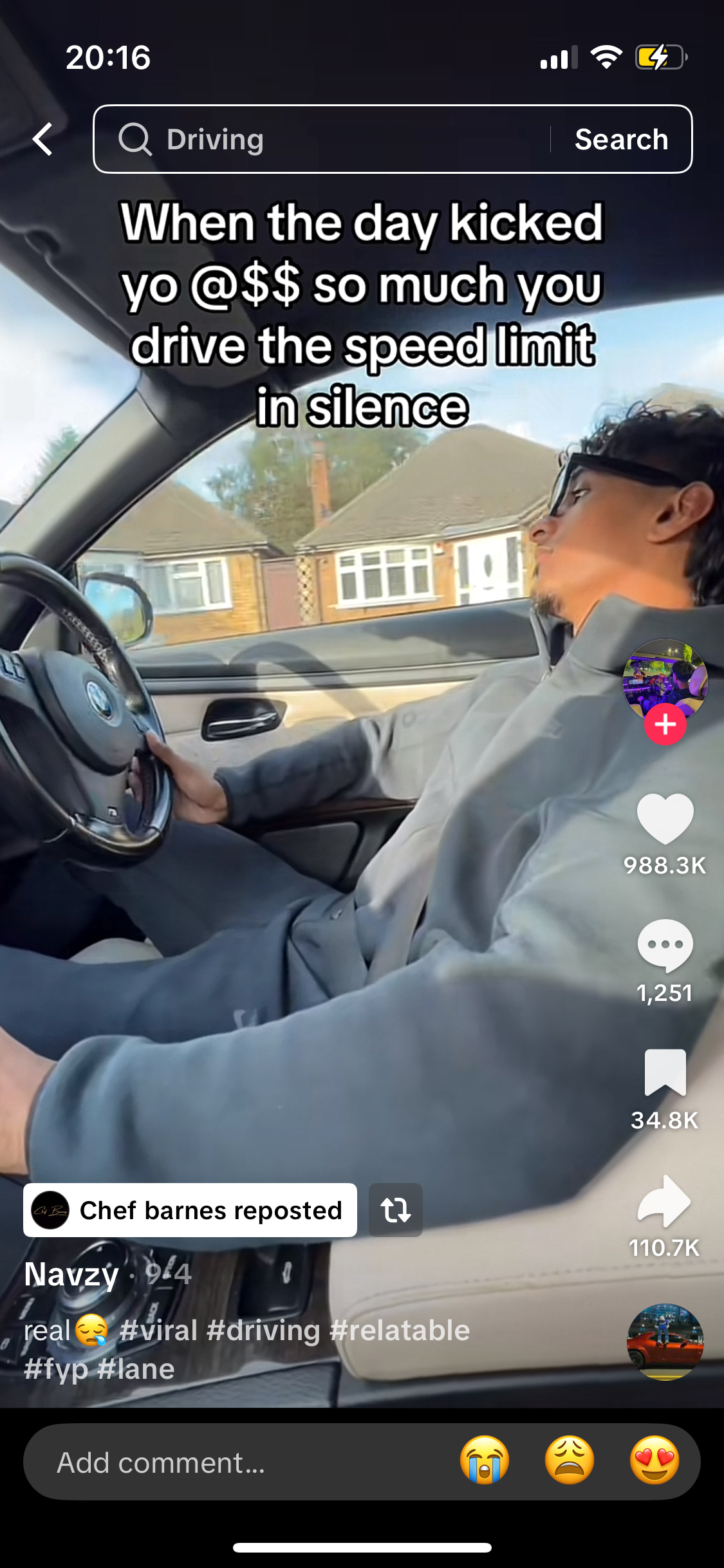
I didn’t even consider it a mindfulness hack until I saw a creator I follow on TikTok talk about it a few months ago. She said we are wearing our minds thin with constant stimulation, much of which we cannot process at all because of the sheer volume of inputs coming at us all day. Being silent for even 10 minutes can help you step away from the noise of the day, reduce stress and improve overall creativity. Trying to decompress with other people’s thoughts and feelings coming at you isn’t conducive to stillness and/or calming your nervous system. Even something as innocuous as listening to your favourite musician belt out their latest songs can work against this practice. Our brains don’t really know the difference between lyrics, our internalised thoughts and reality, so singing along to narratives that contradict who we are or want to be, can in fact, assist in creating an unintended reality. This has been the most difficult part of practising stillness for me, because I quite exclusively listen to ‘sad girl’ music. And don’t get me wrong, I still do, I just don’t belt out the parts that I used to identify with and say out loud that I am not the “I” being referred to. Silly, maybe, but necessary for me.

Some of the things I do in silence now include workouts at the gym, working, writing, walking, and sometimes instituting ‘no-talk time’ with loved ones. The latter is one of my favourite ways to use silence, just being near someone I love, in quiet contemplation is an act of intimacy I relish. The quiet I have embraced in my life allows me to look around more, take in my environment more fully and sometimes more meaningfully. It has also meant that I process thoughts and ideas more slowly and thoughtfully, and I am less hurried to arrive at decisions and subsequent action. I know it can be difficult to contend with having nothing but your thoughts staring back at you, but for me, this practice has meant that a once daunting task, which I actively wanted to drown out, is now something I crave and even need.